What actually happens when you bonk — and how to see it coming
A bonk isn't sudden. It's the end point of a gap that's been growing the whole ride — between the carbs your body burns and the carbs you're actually getting in.
Your muscles burn carbs at a rate set by your effort: harder pace, faster burn. Your gut can only deliver carbs at its own rate, capped by the absorption ceiling (see why you can't absorb more than ~90g/h). If burn rate stays above delivery rate for long enough, your glycogen stores — the carb reserve in muscle and liver — run down. Once that reserve is close to empty, your body can't keep up the power output: pace collapses fast, along with focus and coordination. That's the bonk.
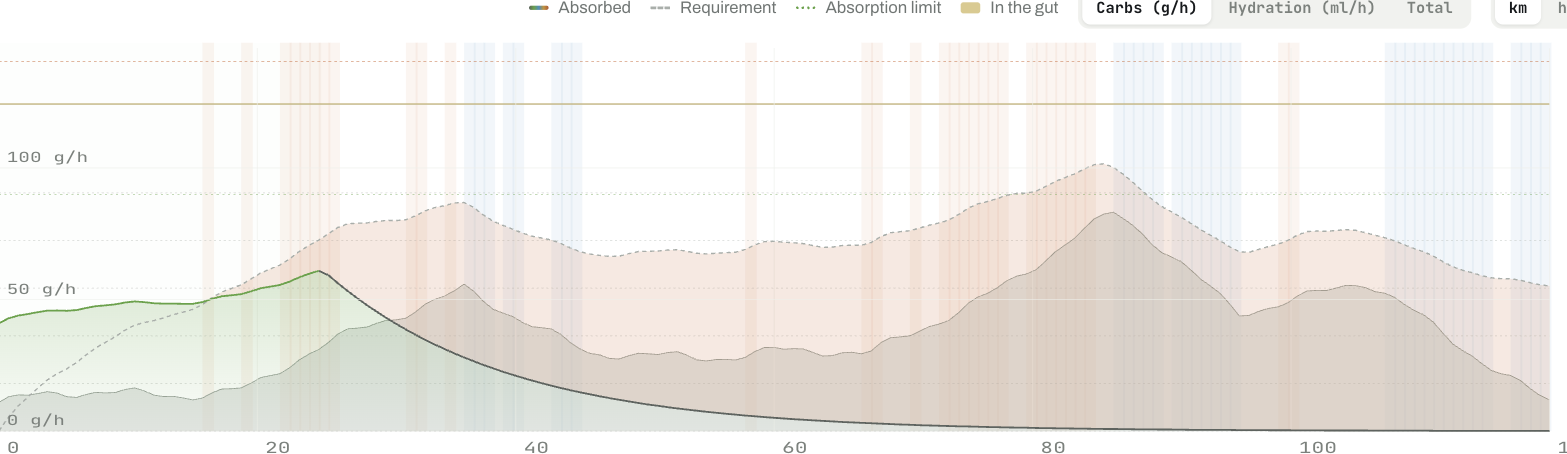
The warning sign is visible before it happens: a widening gap between "carbs burned" and "carbs delivered" on a timeline. Carb Fueling plots both as you build a route, so you can see the gap opening and fix it — earlier feeds, a more concentrated carb mix, or a slightly easier pace — before it turns into a crisis.